Plastic Injection Moulding vs 3D Printing: Which One Is Right for Your Product?
Published by InjectMould Industries, Bawana, Delhi • Reading time: ~7 minutes
Sooner or later, almost everyone developing a plastic product runs into the same question. Should this part be injection moulded, or would 3D printing get the job done faster and cheaper? Both processes end up producing a plastic part, but they get there in completely different ways, and picking the wrong one at the wrong stage can cost you weeks and a fair bit of money.
This is not a case of one process being better than the other. It is a case of each one being right for a different job. Here is how to tell which one fits yours, without the sales pitch either side usually gives you.
The real question is not injection moulding or 3D printing. It is what stage your product is at, prototype, trial batch, or full production, because that alone decides which process actually makes sense.
What Each Process Actually Does
Strip away the marketing language and the two processes work in fundamentally different ways.
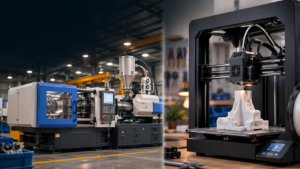
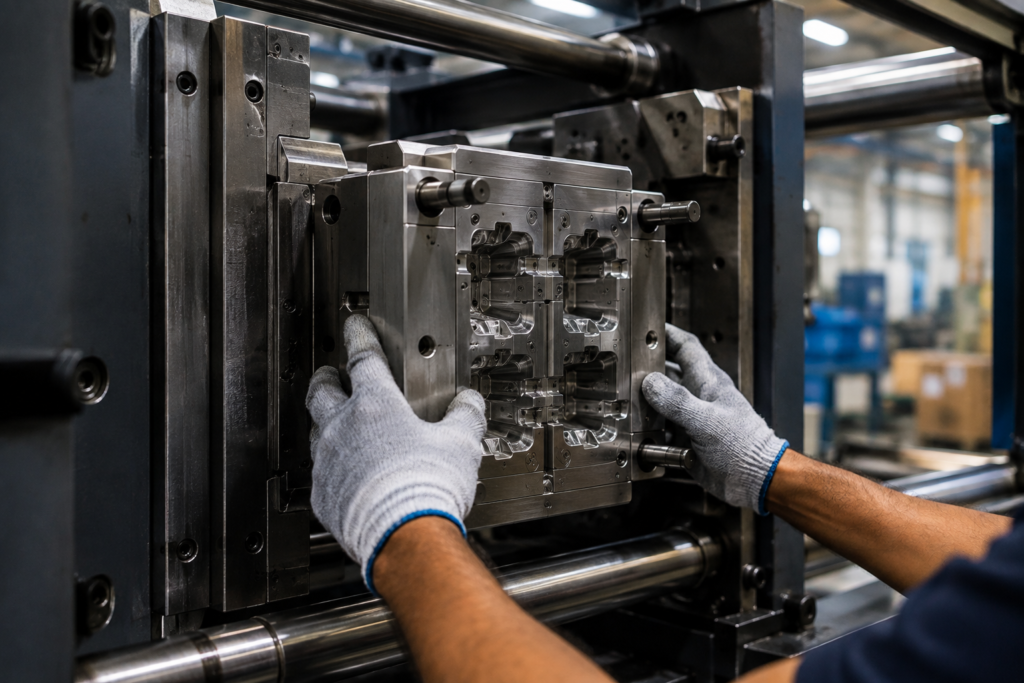
- Injection moulding. Molten plastic is injected into a steel mould under high pressure, cooled, and ejected as a finished part. Every part that comes out of the same tool is nearly identical, which is exactly the point.
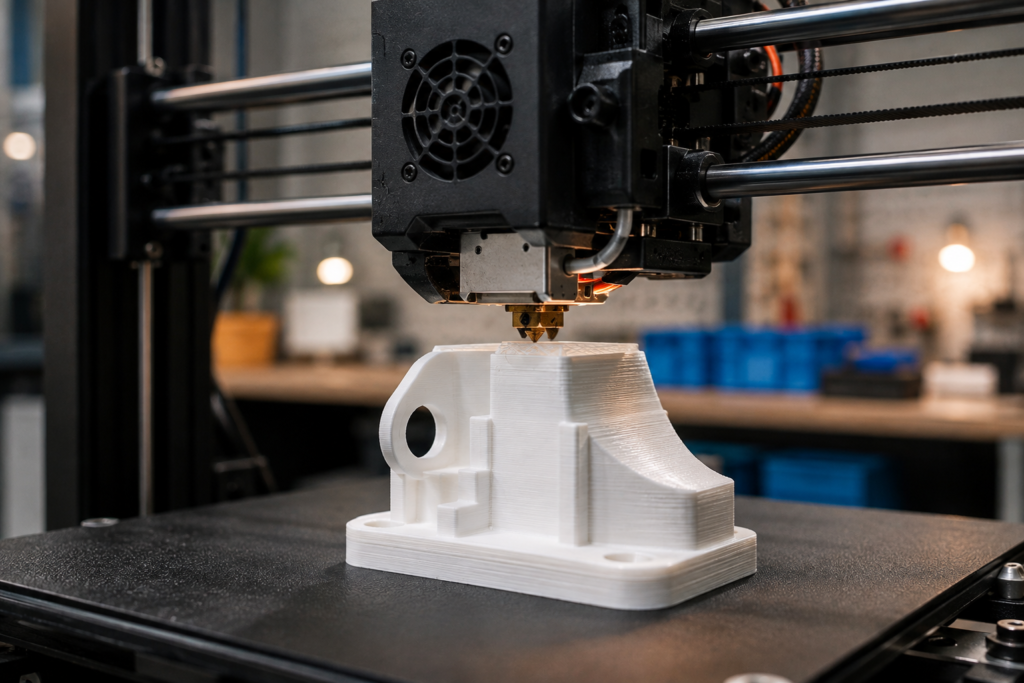
- 3D printing. A part is built directly from a digital file, layer by layer, with no mould or tool involved at all. Change the file and the very next part can look completely different, with no retooling required.
Where Injection Moulding Genuinely Wins
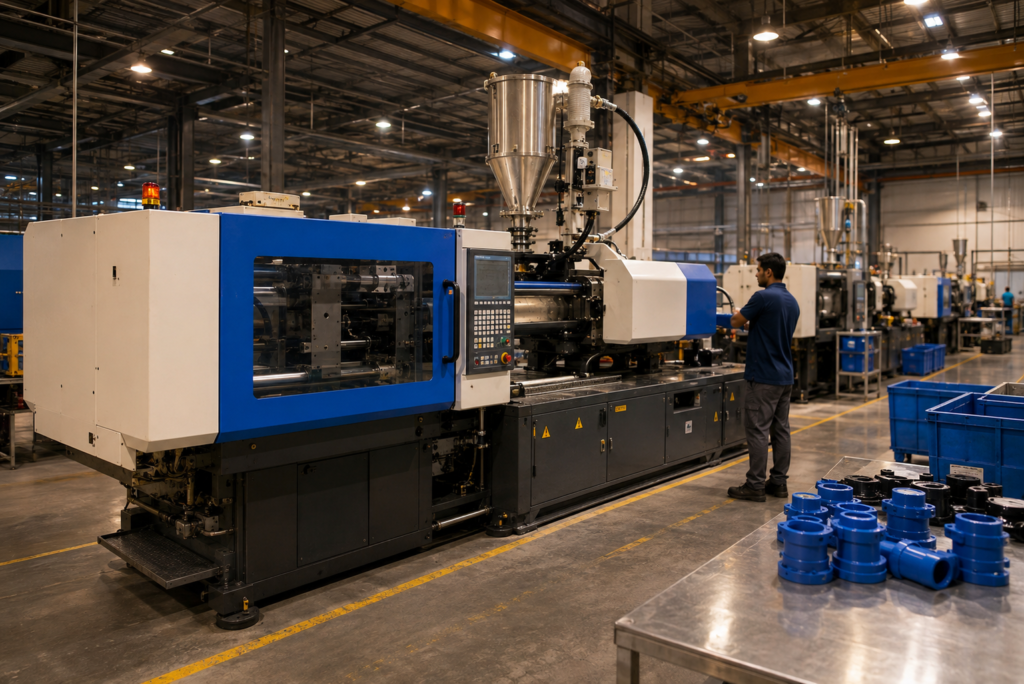
- Cost per unit at volume. Once the tool is paid for, each additional part costs very little to produce. For anything beyond a few thousand units, injection moulding is almost always the cheaper route.
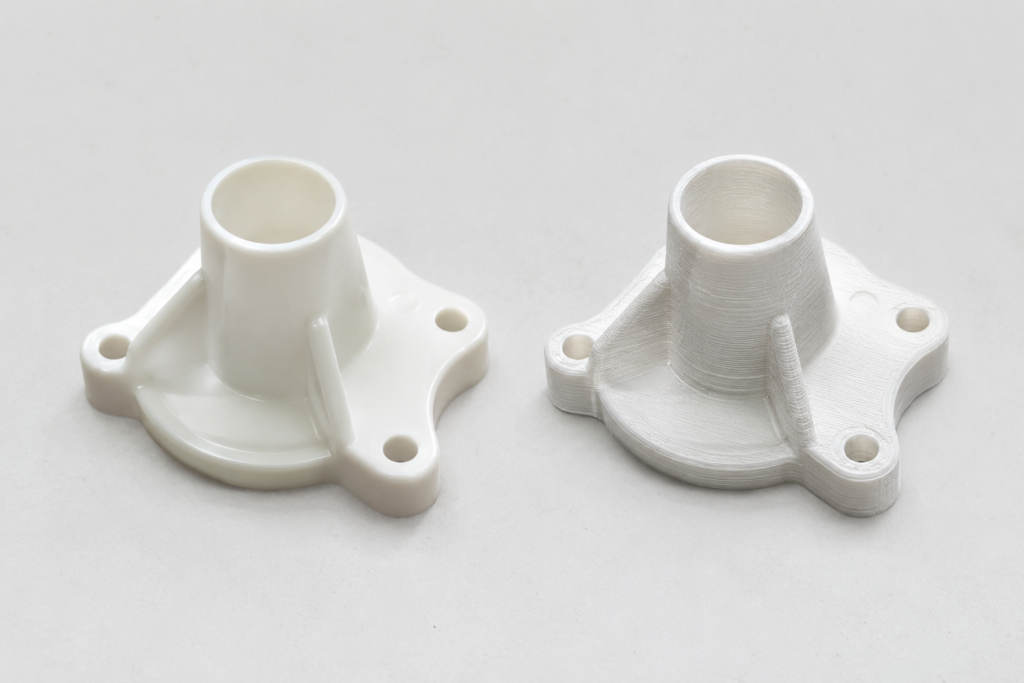
- Material strength and consistency. Moulded parts have uniform strength in every direction, since the plastic flows and cools as one continuous piece rather than being built up in layers.
- Surface finish. Straight out of the mould, parts can come out smooth, textured, or glossy depending on the tool finish, often needing no post processing at all.
- Material range. ABS, PP, HDPE, nylon, polycarbonate, and dozens of other engineering grade resins are all readily available for moulding, each with well understood properties.
- Part number one thousand and part number one look exactly the same, which matters enormously once you are shipping a real product to real customers.
Where 3D Printing Genuinely Wins
- No tooling cost. There is no steel mould to pay for, which means the upfront cost of getting your very first part is a fraction of what injection moulding requires.
- Speed for a single part. A prototype can go from finished design file to a physical part in a matter of hours, not the weeks a mould build would take.
- Design freedom. Internal channels, complex lattice structures, and geometry that would be impossible or extremely expensive to mould are often straightforward to print.
- Easy iteration. Change the design, hit print again. There is no tool to modify or scrap, which makes it ideal while a product is still being refined.
- No minimum order. Printing one part costs roughly the same per unit as printing ten. There is no volume penalty for small or highly customised runs.
Cost Comparison, and Why Volume Changes Everything
This is where most of the confusion actually comes from. Neither process is cheaper in every situation, it depends entirely on how many units you need.
A single 3D printed part might cost a few hundred rupees in material and machine time, with no upfront cost at all. The same part, injection moulded, could carry a tooling cost running into tens of thousands of rupees before a single unit is produced. But once that tool exists, each additional injection moulded part might cost a fraction of what the same part would cost to print.
For most plastic parts, the crossover point sits somewhere between a few hundred and a couple of thousand units, below that, 3D printing usually wins on total cost, above it, injection moulding usually does. The exact number depends heavily on part size, complexity, and material, so it is worth actually running the numbers for your specific product rather than assuming.
Material and Strength, the Part Most People Skip
Cost is only half the decision. What the part is actually made of, and how strong it ends up being, matters just as much.
- Isotropic versus layered strength. Injection moulded parts are strong in every direction equally. 3D printed parts are built layer by layer, and can be noticeably weaker along the layer lines, which matters for anything that takes real mechanical load.
- Material options for function. Injection moulding gives access to a far wider range of engineering resins with well documented properties. 3D printing material choice has improved a great deal, but functional, load bearing applications still lean toward moulding.
- Finish and tolerance. Moulded parts typically hold tighter tolerances straight out of the tool. Printed parts often need sanding, coating, or other finishing work to reach a similar surface quality.
So Which One Should You Actually Pick?
Here is the simplest way to think about it, based on where your product actually is right now.
- Still testing form, fit, or a rough concept. Go with 3D printing, it is fast and the cost of changing your mind is close to nothing.
- Need a small batch of functional prototypes for real world testing. 3D printing or CNC machining usually still makes sense here.
- Moving toward a confirmed design with an order of a few hundred units or more. Start pricing out injection moulding tooling.
- Planning ongoing production of thousands of identical units. Injection moulding will almost always work out cheaper and more consistent.
- Not sure yet which stage you are at. Many companies use both, 3D printing the prototype first, then moving to a mould once the design is locked.
How InjectMould Industries Can Help You Decide
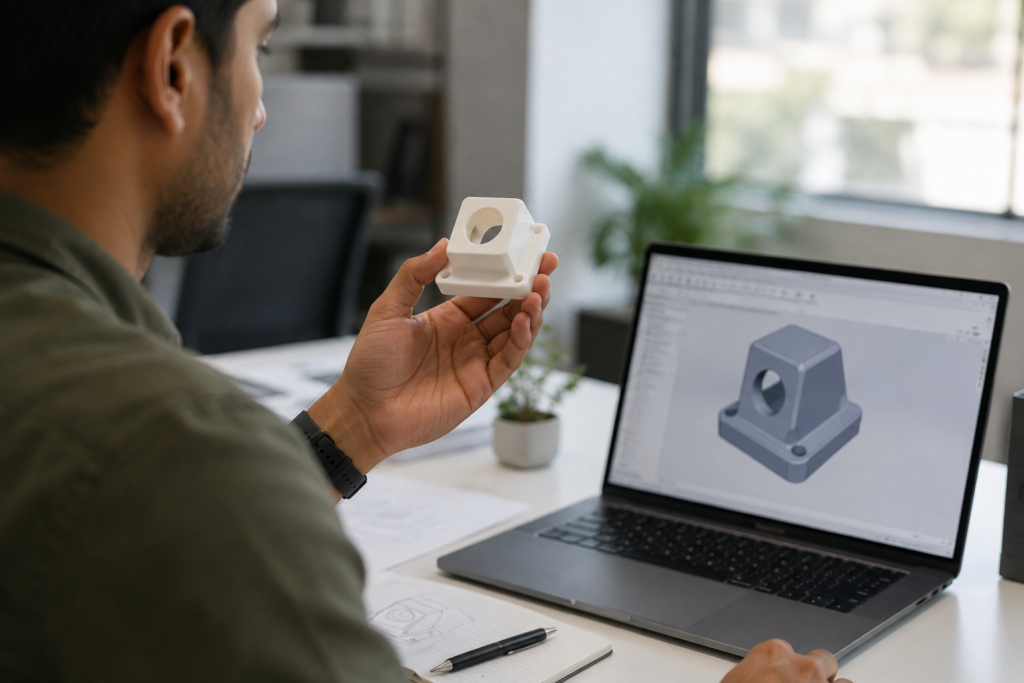
We work with businesses at every stage of this decision, from a single prototype through to full production tooling. If you already have a 3D printed prototype and are wondering whether it is time to move to injection moulding, we can walk through the design, the expected volumes, and give you a straight answer on what tooling would actually cost and how soon it would pay for itself.
Reach out at +91 98713 98314 or amandeep@injectmould.in and we will help you figure out which process actually fits your product, no pressure toward one or the other.
The Bottom Line
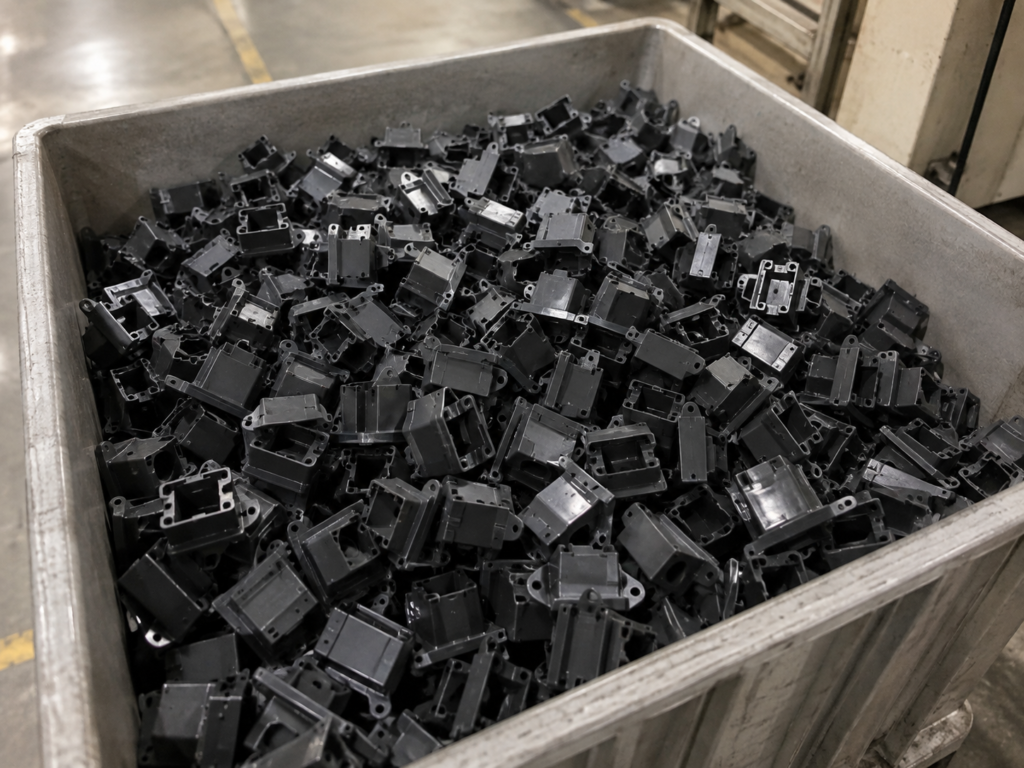
Injection moulding and 3D printing are not competing technologies, they solve different problems at different stages of a product’s life. 3D printing gets you to a working prototype fast and cheap. Injection moulding gets you to consistent, strong, affordable parts once you know exactly what you are producing and how many you need.
Knowing which stage you are actually at is most of the battle. Get that right, and the choice between the two stops being confusing.
Recommended For You!

Quick Links
- +91 98713 98314
- Home
- About Us
- Contact Us
- Services
Connect With Us
- +91 98713 98314
- amandeep@injectmould.in
- @injectmould.in
About Us
InjectMould Industries is an end-to-end manufacturing partner for OEMs, delivering reliable custom plastic parts and plastic component manufacturing. Located in Bawana , Delhi.
injection moulding vs 3D printing plastic manufacturing process comparison prototype to production Delhi injection moulding services Delhi
- 3D printing versus injection moulding
- low volume plastic manufacturing India
- plastic prototype manufacturer Delhi
- custom plastic part manufacturer India
- choosing injection moulding process
- plastic product development Delhi
- injection mould tooling cost India
- functional prototype manufacturer Delhi